A story inspired by the Culm Valley Light Railway, by Mike Dalby
Mike Dalby, a former Chair of Uffculme Local History Group and still a member of the group’s committee, takes us on a journey on the Culm Valley Light Railway between Tiverton Junction and Hemyock and back home again to Uffculme. Set sometime in the middle of the 20th century, Mike tells the story of one family’s exciting day out. What a way for Christopher to spend his birthday!
[You can click on the images in the story to enlarge them]
Train Ride!
“Hello children and happy birthday, Christopher! Today we have a big surprise for you both!
For a special treat we are going for a ride on the railway from our village of Uffculme down to the main line at Tiverton Junction where we will watch some big express trains come through the station, before boarding the little train again and ride all the way through Uffculme to Hemyock and then return to Uffculme with the milk train.”
“Are we all going Mummy?” asked Christopher.
“Yes all four of us are going – Daddy and I, you and little Mary Jane!”
-
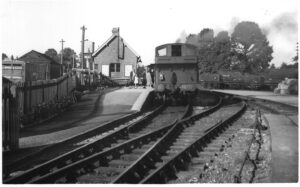
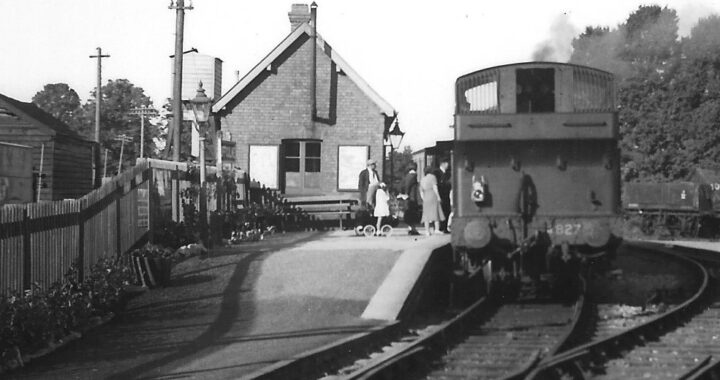
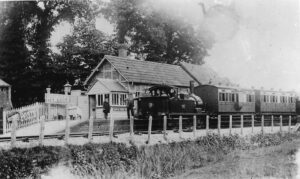
- All aboard the Culm Valley Light Railway at Uffculme station!
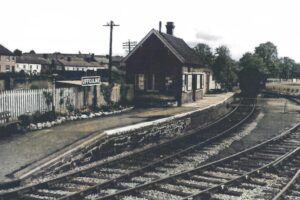
So shortly they left their cottage in Bridge Street and walked down to the station in time to catch the 10.07 down to Tiverton Junction. Mr. Cockram, the Station Master, told them the station had been built in time for the opening of the railway on the 28th May 1876 and that the whole line had taken only two years to build.
They bought the tickets for Tiverton Junction and they would have to buy the return tickets at Tiverton Junction.
There was only one carriage and there were no corridors in the carriage but they were able to all sit on the bench seats opposite each other and to look out of the window. Soon they were off, clattering over the points of the lines to the sidings and past the level crossing gates across Bridge Street and past the Small’s feed mill.
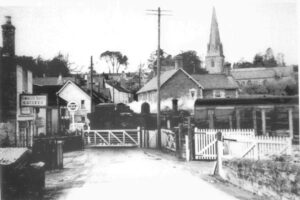
“There was once a slaughterhouse on that site before the feed mill”, said Daddy. “They used to take all the meat to London by train to sell in Smithfield Market” he added.
Then the train went on over the little bridge across the leat which took water from the River Culm near the Great Weir. On went the train down through the fields. Mummy told a story about how she had been on the train once when the driver stopped by the field. He and the fireman had jumped out and crossed the fence to help a sheep that was lying down and couldn’t get up. Mummy said that happened quite a lot along that stretch – the farmer of course was always very grateful to them. A few minutes later the train arrived at Coldharbour Halt.
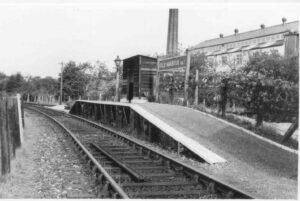
Pausing to collect three passengers, they were off again, passing the big textile mill just at the whistle blew for the end of shift. Soon they were up to the speed limit of 15 m.p.h., chuffing down the valley past the cows in the fields.
“Look out on the right, Christopher, as we pass Selgar’s Corn Mill, powered by the water wheel – there we go! We will soon be pulling into Tiverton Junction, but first we go under the main road and past the old farm house and into our own platform.”
“Come on Mary Jane!” called Christopher, as they jumped out of the carriage onto the platform at Tiverton Junction.
-
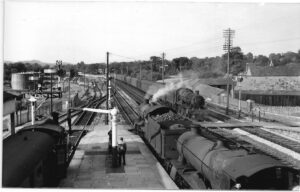
- Tiverton Junction on 1st July 1967
“I think the Torbay Express is due in a few minutes”, said Daddy. “I wonder if it will be pulled by one of the King class of locomotives.”
Here it is, better stand back from the edge of the platform, behind the white line.
“Yes, it is a King class! Did you see the bell on the front and its number, Christopher?”
“Yes Daddy, it was King George V number 6000 and I saw the bell!”
“Yes the bell was presented to the engine when it went to America in 1927 to run at the Baltimore and Ohio railroad Centenary celebrations. The Americans were impressed with the engine for its small size and high power.”
“Time to climb aboard the little train for our journey to Hemyock”, said Mummy after she had been to buy the tickets.
‘Chuff chuff’ went the small engine, running forwards up the line, pausing again at Coldharbour Halt, to drop off Mrs. Chard who had been shopping in Tiverton.
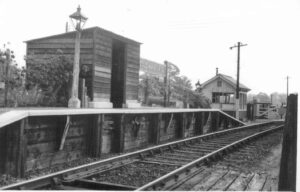
“No, we are not getting off at Uffculme this time, but we can wave at your schoolfriends as we leave, Christopher.”
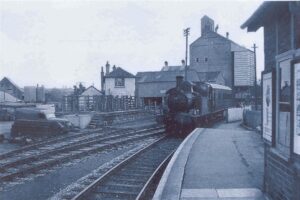
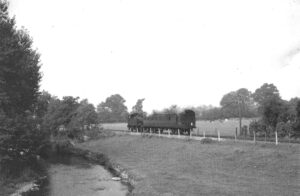
“We will be going across the fields to cross the old drovers’ road at Five Fords”, Mummy told the children that this was called Ratsash Lane.
“What a funny name!”, said Mary Jane, “Why is it called that?” Daddy explained that there had been a small iron works at nearby Prescott in about 1900, probably even earlier.
“They used to unload the coal and coke from the train at Five Fords. Ratsash was the name they used for the stony waste or clinker which was left after the coal was burnt in the furnace at the iron works. So that’s why it’s known as Ratsash Lane”, Daddy went on to tell them. Christopher and Mary Jane looked astonished, although they were already peering out of the window on the opposite side towards the hamlet of Craddock but it was just too far off to see the houses. Mary Jane did manage to exclaim “Golly gosh!” at Daddy’s interesting information. It was hard to take it all in with so much of interest outside.
Going down the valley they passed the weir and pulled into Culmstock station.
“Did you know that R. D. Blackmore who wrote ‘Lorna Doone’ lived in Culmstock for about six years while his father was the Curate of the church?” said Mummy.
The train paused awhile to allow three passengers to alight and for two others to climb aboard for the trip to Hemyock. Then, with a toot of the whistle, the little train was off for the short run to the small halt at Whitehall. They again paused to let off one passenger who lived in the hamlet and had also been shopping in Tiverton.
“Can you see Culmstock Beacon on the left as we leave the village?” asked Mummy.
“The Beacon was one of those used when they lit the fires to announce that we had won the Armada Battle against the Spanish in 1588.” Christopher and Mary Jane pressed their noses against the window to get a better view.
Again, with the hoot of the whistle, they were on their way to Hemyock. It was a little over a mile before they pulled into the station in the shadow of the huge creamery mill with its imposing chimney.
-
- Hemyock Station
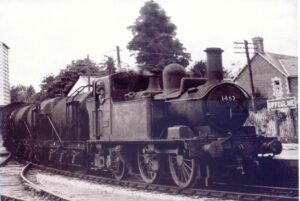
There was a half an hour wait at Hemyock station but lots and lots to see. They watched the little 14XX class Great Western engine number 1451, as it shunted the two empty tank waggons that they had brought from Tiverton Junction into the adjacent siding and collected three tanks full of milk to return to the Junction to be taken to London for the following morning’s deliveries. The engine then ran on the siding to the other end of the carriage, to couple up again ready for the return to Tiverton Junction.
Soon all was ready and again, with a toot-toot of the whistle and a wave of the guard’s flag, they started the return journey to Uffculme.
As the train was leaving, Christopher, Mary Jane, Mummy and Daddy all tried to spot the Hemyock Castle but it was hidden behind some houses and the church in the village. They chugged on through the countryside. Nobody had told the guard that they wanted to alight at Whitehall halt and so the little train trundled through without stopping.
They did stop in Culmstock, though, to collect more goods and two passengers who said they were going to go through to Exeter from Tiverton Junction.
“Look out for the hamlet of Prescott where the iron works were, about half way to Uffculme”, said Mummy. “It always reminds Daddy of his trips to the Prescott hill climbs up in Gloucestershire! He always wishes he lived that near!”
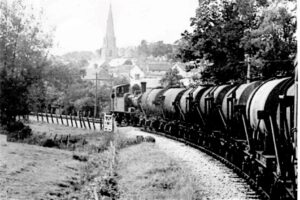
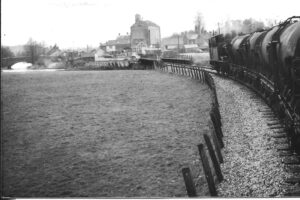
Not long afterwards the brakes were being applied and the train stopped at Uffculme station.
“Uffculme!” shouted Mr Cockram.
“Come on children, time to climb down from the carriage.”
“Go and say thank you to the engine driver, Mr Hawkins, and the fireman”, said Mummy.
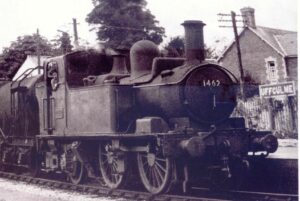
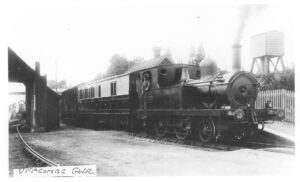
“Thank you, Mr Hawkins!” pipped up Christopher. Mary Jane added her thank you and said how much she liked the dark green colour of the engine. They all walked back up to their cottage in Bridge Street after a very happy day! What an interesting and exciting journey it had been. Christopher and Mary Jane agreed that they had learned so much and Christopher said it was the perfect way to spend his birthday.
“Thank you Mummy! Thank you Daddy!” said both the children together.
[You can read more facts about the Culm Valley Light Railway here.]